

Hi everyone,
This week, a piece of research that I wanted to find room for in Seven Levels, but wasn’t able to.
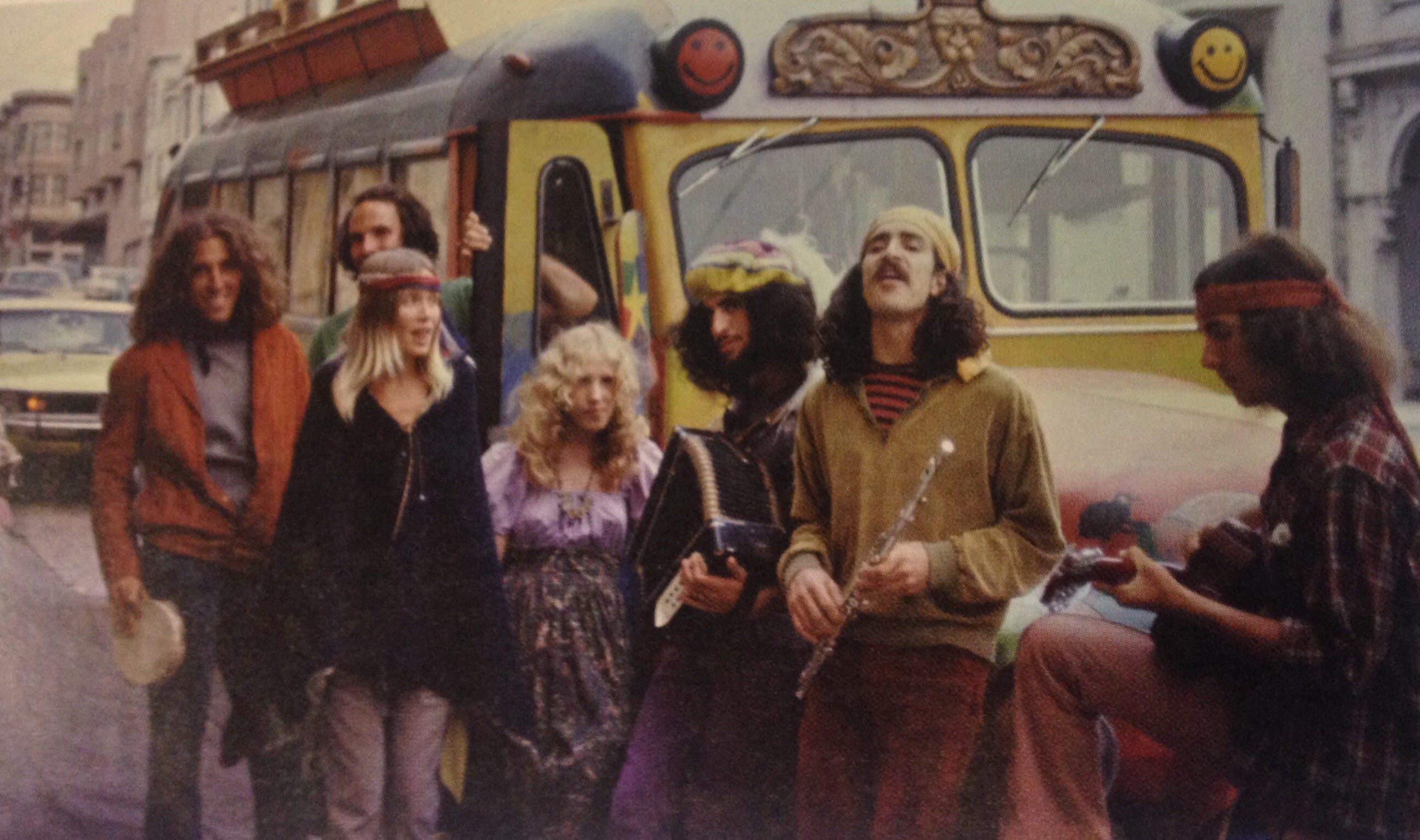
As part of our discussion of the “acid wars,” I suggested that the pressure on Paul to try LSD extended beyond internal band peer pressure to the culture as a whole — that Paul needed to have the experience of an acid trip in order to maintain his cultural credibility/power as a co-leader of the Love Revolution.
British social scientist Paul Willis offers an intriguing perspective on this—
“A comment Les [one of Willis’ interviewees] made remained opaque to me for a long time, but it gives a lead towards understanding the special distinctiveness of drug use by hippies. He said that it was ‘possible to take acid and not ‘trip’, and possible to ‘trip’ without taking acid; there were many ‘heads’ in ‘straight’ society.’ In fact, the importance of drugs did not lie in their direct physical effects, but in the way they facilitated passing through a great symbolic barrier erected over against ‘straight’ society.
“The ‘head’, a more recent title for hippy, derived from the more specific ‘acid head’, more exactly represents the elements of drug experience in the culture. He is defined not simply by drug use, but by his existential presence on the other side of this symbolic barrier. It was symbolic and not actual, so that individuals with a ‘beyond the barrier consciousness’ could be ‘real’ ‘heads’, even though they did not take drugs. [emphasis added] On the other hand, those who took drugs, but without feeling their symbolic significance, were not ‘heads’: they were just experimenters.
On the ‘straight’ side of the barrier was the world of personal responsibility, grey colours, gaucheness and lack of style, on the other side was the world of freedom, lack of responsibility and stylishness – ‘the hip’. The drugs did not intrinsically contain this second world: they should not be thought of as microfilms of experience surreptitiously slipped on to the deep projector of the mind. They were merely the tripswitch to bring about an entry into areas which were essentially self-created.”1
What Willis (but really his interview subject “Les”) is suggesting here is that given his status as a Beatle, Paul would not have needed to trip on LSD (or for that matter, cannabis) to maintain his power as a co-leader of the Love Revolution — that he would have continued to hold that power simply by virtue of being Fab. Put another way, even if none of the four had chosen to partake of mind-altering substances, the unique cultural power of being a Beatle would have been more than sufficient to put them “beyond the barrier consciousness.”
There’s some truth to this, I think. Just as Dylan assumed that The Beatles were already turned onto pot before he met them, it’s likely that had the Fabs never tripped on LSD, it would nonetheless have been assumed that they had, simply by virtue of their extraordinary countercultural stature.
But of course, there’s a big difference between being perceived as being “beyond the barrier consciousness” and actually crossing that barrier. And that’s where — in the case of Paul and LSD/cannabis— this line of thought folds in on itself.
As we talked about in Seven Levels, Paul’s psychedelic experience of cannabis seems to have transformed his creative consciousness so radically that it set in motion a series of events that fundamentally altered The Beatles’ music and thus the Love Revolution and thus Western culture. I don’t think that series of events happens without Paul’s cannabis-induced “seven levels” experience.
So while Paul may not have had to experience substance-induced higher consciousness to maintain his cultural power, he probably did need to experience substance-induced higher consciousness to unfurl the full breadth of his musical genius — which is, of course, the most obvious source of his cultural power.
A pretzel-twisting example of perception shaping reality shaping perception.
Until next week.
Peace, love, and strawberry fields,
Faith 🍓
Paul E. Willis, “The Cultural Meaning of Drug Use,” Resistance Through Rituals: Youth Subcultures in Post-War Britain, edited by Stuart Hall and Tony Jefferson, Routledge, 2006.
NOTE: Willis’ research was conducted in 1971.
