

February 9, 1967. St. John’s Wood, London.
Paul McCartney is home at Cavendish when the bell on the front gate rings. He answers it, because — as he’ll explain years later — I always used to answer it to everyone. If they were boring I would say, “Sorry, no,” and they generally went away.
On this night, the caller is not boring.
“I’m Jesus Christ,” he tells Paul.
“Oop,” Paul answers, slightly shocked. "Well, you'd better come in then."
Once inside, Paul makes the man a cup of tea, then sits and talks with him until it’s time to leave for the studio. But instead of sending the man away—
“If you promise to be very quiet and just sit in a corner,” Paul offers, “you can come."
And the man does promise, and so Paul takes him to the studio. And the man sits quietly while The Beatles record “Fixing A Hole.”
I never saw him after that, Paul will recall later. There were a lot of casualties about then. We used to get a lot of people who were maybe insecure or going through emotional breakdowns or whatever.1
You might wonder why Paul answered the door so readily, why he welcomed a stranger who might be emotionally unstable into his home? Why he took the time to serve him tea, and talk with him? Why he invited him into the studio?
Paul’s answer is simple—
I thought, well, [he] probably isn't Jesus Christ. But if he is, I'm not going to be the one to turn him away.

The practice of radical hospitality — or “welcoming the stranger" — is woven into every major spiritual and mythological tradition, including that of the Love Revolution.2
A divine/magickal being — cloaked in rags — knocks at the door asking for food and shelter. It’s a test. To pass, the person who answers the door must offer the hospitality of the house. More importantly, the stranger — however disreputable they appear to be — must be treated not like a beggar, but like a king. The reward for passing this test is the attainment of spiritual enlightenment (often symbolized by being anointed with royal status).
The message of radical hospitality is simple and profound — we welcome the “Christ” inside ourselves (in whatever way you want to interpret that archetype) by welcoming the “Christ” in others. When we open the door, and let ‘em in.
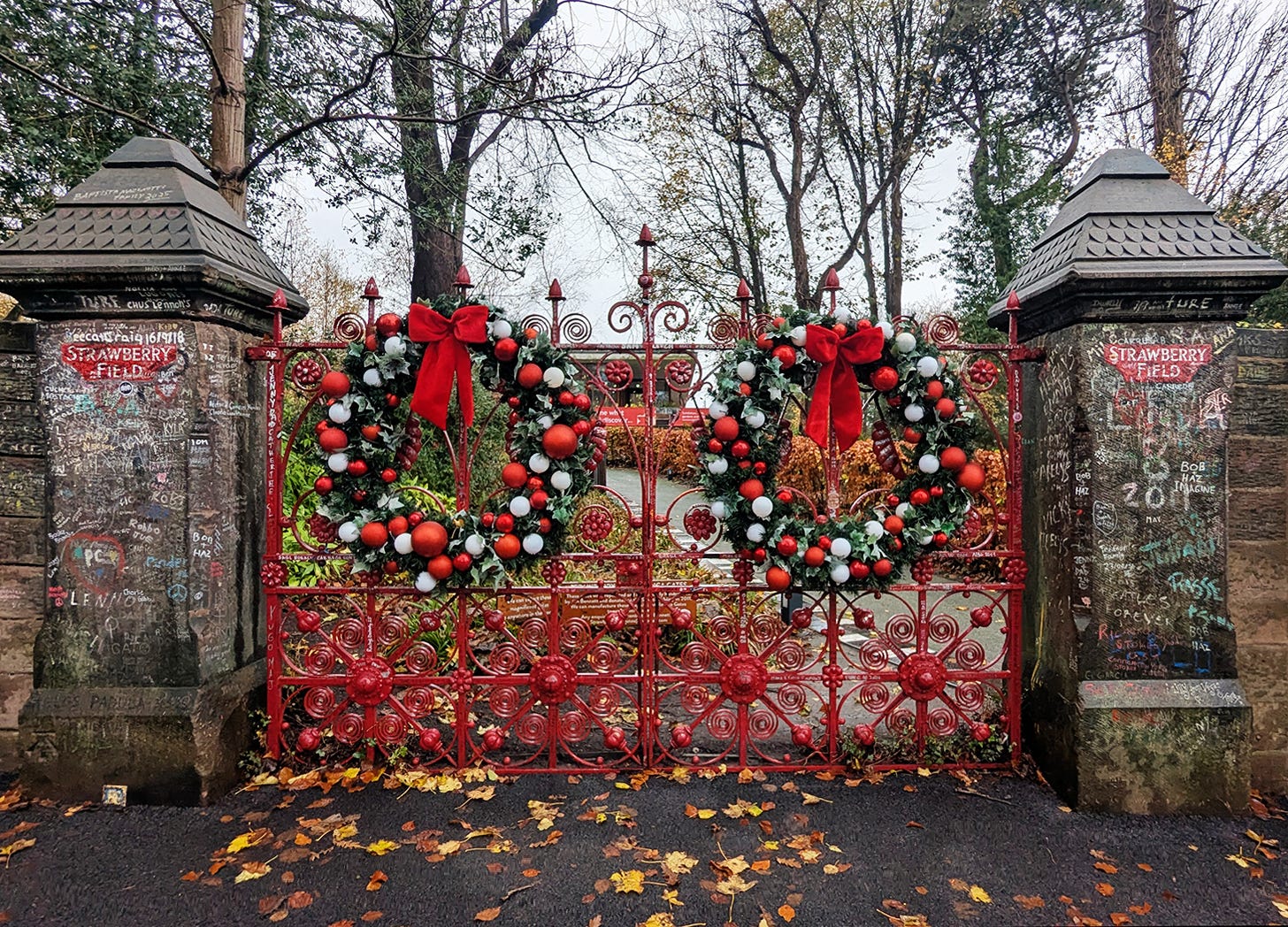
This holiday season, I wish each of you the most beautiful of holidays, and the gift of a knock at your door.
Peace, love, and strawberry fields,
Faith 🍓

quotes in italics from Many Years From Now, Barry Miles, H. Holt, 1997. (adapted into parable form from Paul’s story in the book, because Paul buries the lede in his telling of it)
If you’re startled at my calling the narrative created by the Love Revolution of the Sixties a spiritual/mythological tradition, it’s probably because you haven’t yet read/listened to Beautiful Possibility, in which we tell that story in detail, beginning with the first episode.